01
Natural digestion
The same principle as a living digestive system. Organic matter moves through successive stages and comes out stable, pathogen-free and ready for the soil.


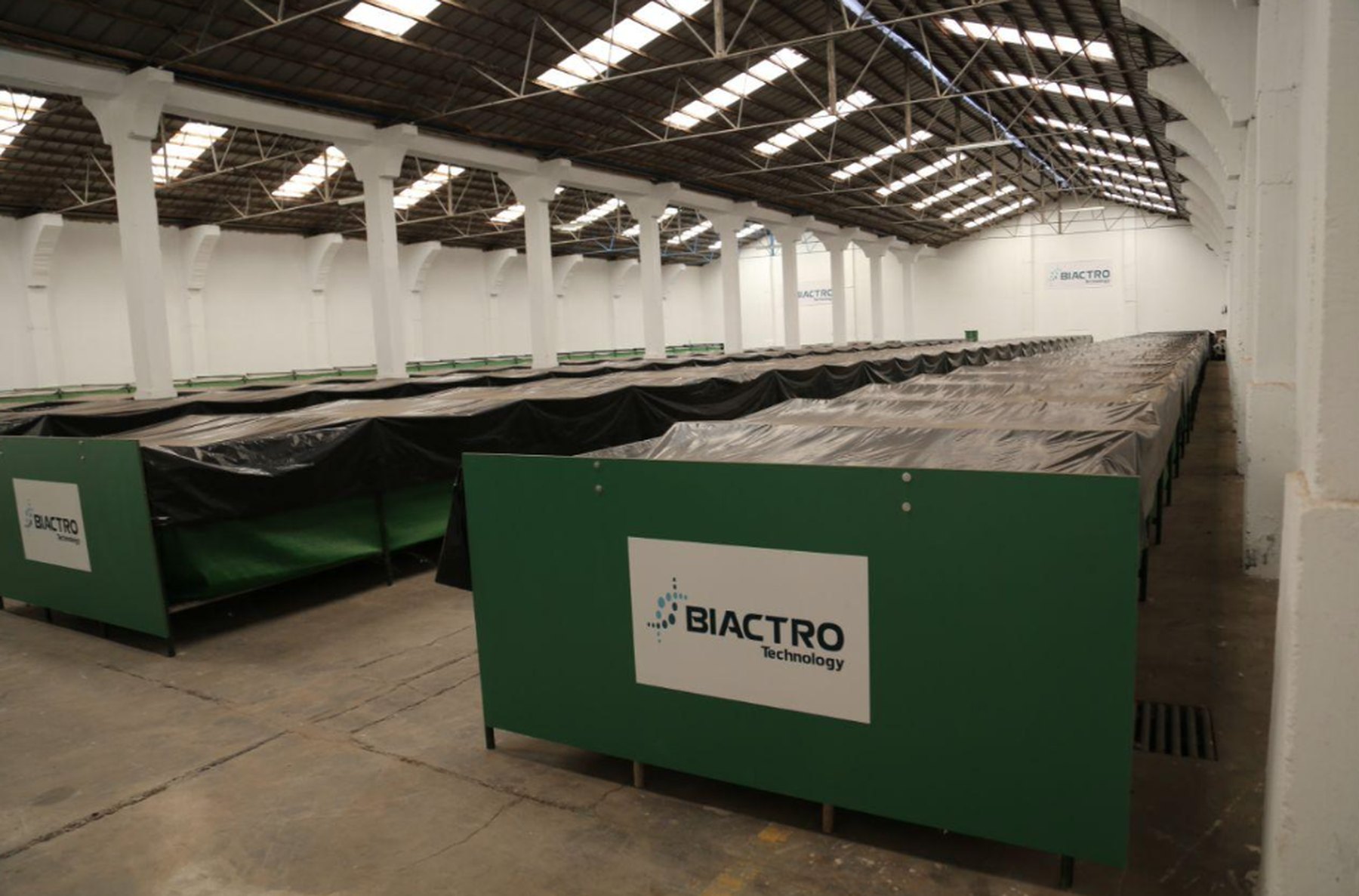
Organic residues transformed where they are produced, in continuous cycle and at ambient temperature, without emissions, leachate or odour. A compliance cost becomes an agronomic asset.
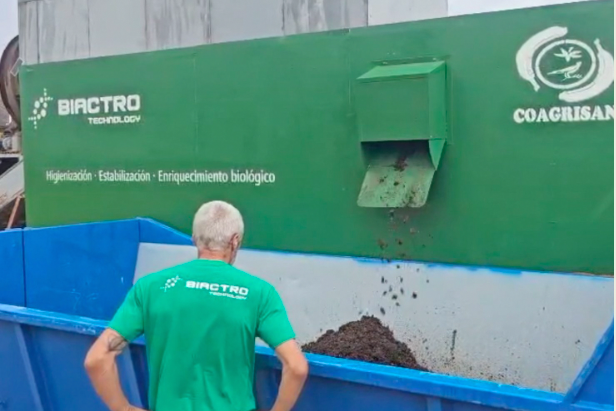
Class-A organic amendment leaving the plant
Across the UK, farms, cooperatives, food processors and local authorities are meeting the same constraints at once.
The current system treats organic matter as a problem. Regeneration starts when it is treated as an asset.

A fully operational, industrial-scale system that eliminates organic waste at source while regenerating soil, food systems and local resilience.
The same principle as a living digestive system. Organic matter moves through successive stages and comes out stable, pathogen-free and ready for the soil.

Every tonne entering the system is transformed. No secondary waste streams, no liquid fraction to dispose of, no off-site processing.

Containerised architecture for farms, cooperatives, AD plants, food processors or municipal sites. Modules replicate to match local volumes.
1:1 mass balance. One tonne in, one tonne out. Nothing leaves the site as waste.
Where the site allows, the ecosystem extends into crop production grown directly on the regenerated fertiliser.
Each site becomes a local cell of food sovereignty, demonstrating regeneration in visible, productive terms.
Growing beds filled with regenerated substrate, under cultivation
These are operational figures measured at the plant. Modules replicate to match local volumes. Avoided greenhouse gas emissions depend on the feedstock and on what the site does today, so we calculate them per site rather than quoting a single number.
The ecosystem has run in continuous industrial operation in Europe since 2019, treating organic waste at commercial volume.
Prospective partners are invited to visit and see the complete cycle running.
Tell us the material, the annual tonnage and the location. We will come back on whether a module fits your site.